Monday, March 22, 2010

Following the Beat

Vaslav Nijinsky

The Joffrey's Ballet recreation of The Rite of Spring

"The dancer's body is simply the luminous manifestation of the soul."

-Isadora Duncan

Composers, such as the great Igor Stravinsky, created some of the most influential scores, which are studied at major universities in the music program, for dance. Igor Stravinsky composed “The Rite of Spring”, which was an enormous achievement for the growth of dance. What so many do not know is that the score was written primarily for a ballet choreographed by Vaslav Nijinsky in Paris. Both of the artists created a new genre in dance and music called Modern, which is the most popular style in dance today. At the time of its development however, it wasn’t welcomed so easily.

Friends of mine, studying at my university in the music department, knew of the infamous “The Rite of Spring” score but had no idea about the ballet that it was created for. The appreciation of the original choreography as fallen through the cracks while its partner, the music, gets praised and remembered still today. My long-term boyfriend is a Recording Industry major who knew of this score, yet not the ballet. It saddened me that it was hard for him to believe that that was the music’s intended purpose, to partner with a dance.

Most dances, not all, can be accompanied by music, right? Most music, not all, makes you want to move to the beat, right? This tie between the two arts is a relationship that defines each other. Both are genetically built into our system, though some may express them much more forward than others and with a deeper understanding through study. Regardless, we all sway to the beat and sing along with the words.

The dancer uses the body to express emotion through sight for the viewer. A dancer’s body is their instrument, no strings attached. A musician has an instrument to create their art through sound. When combined these two make a splendid production that appeals to two of our most powerful senses. Yet, why is dance, as an art, often made fun of or considered boring?

Music is universal, as is dance, however, music is more popular. I hear the mass majority of my friends talk about music than dance: they listen to it in their cars, in their rooms, at a concert, while working out, while lying on the beach, and during thousands of other leisure activities.

If dance and music are so closely related, then why isn’t everyone constantly dancing or viewing it? I don’t mean dancing in the terms of swaying the hips and tapping the foot. I mean by the emotional connection that so many have with music, even if they aren’t musicians. There is still that deep understanding of music in people even if they haven’t studied it. Dance, however, doesn’t get that same attention.

You don’t have to be a trained dancer to witness those complex feelings that dance portrays. Again I come to the realization that not everyone has the same interests. Nor should they be forced to feel a connection that doesn't exist with a certain art form, but that’s not the point.

The question is, why do so many feel a complex relationship with music and not dance when they are the exact same when applied to our senses. Through dance you can actually see the music. I think that’s what Vaslav and Igor’s intent was.

Tuesday, March 16, 2010

Bloodshed Over Ballet

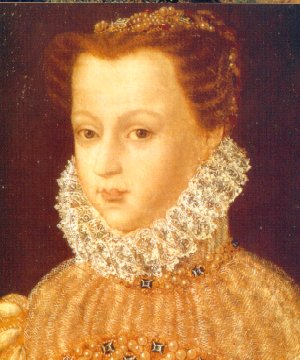
Catherine de Medici

St. Bartholomew's Day Massacre

Where did ballet start exactly?

Well, it started in Italy, but I'm going to jump forward from that time period of development into a time of controversy and growth, both in art and religion. We are in the 16th century in France where the power of dance has developed in popularity. Catherine de Medici brought over ballet to France from Italy when she became a part of the royal family at a very young age, when she already had a great perspective of ballet. Married at the age of 14 to Henry II, Catherine took France under her reign as queen along with her Italian traditions of dance.

After Henry's death (due to a jousting accident) Catherine became the primary ruler. The couple had 10 children together before Henry’s death, three of which were boys. Being a devout Catholic, Catherine made sure her children and new country follow the same teachings. I wouldn’t want to get into an argument with Catherine, she knew what she wanted and wouldn’t have it any other way. She’d even kill you over it.

While she held the throne the Huguenots, followers of Martin Luther, began to rise in France. Catherine was not the type of woman to tolerate this well. One of Catherine's daughters was to marry Henry of Bourbon, who was a protestant (Huguenot). Sounds like a set up maybe. I hardly believe Catherine would let one of her daughters marry someone she despised because of their religion.

With a plot in mind, Catherine decided to put on a grand ballet in "celebration" of her daughter’s marriage. She invited all the Huguenots from the Henry of Bourbon’s region to come to Paris as guests. It was 1572 and the ballet Defense du Paradis premiered at the party. Catherine's sons were even performers in this production, where they defended heaven from the opposing Huguenots. The Catholics, of course, were choreographed to win. Sounds like the guests would not have enjoyed this performance as much as they thought they would.

After a rather outrageous performance that slandered their beliefs, the Huguenots made their way to their courters for a nights rest in Paris. While in their sleep the Catholic court, ordered by Catherine de Medici, dragged them from their beds into the town's streets and murdered them. This was called St. Bartholomew's Day Massacre. It was an infamous part of the French wars of religion. I remember taking European History in high school and learning about this massacre, however, I never heard the word “ballet” once to be associated with this bloody day.

Henry of Bourbon’s life was spared after swearing to Catherine he would convert to Catholicism. Little did the Catholics know is that one-day he would have his revenge on the Catholics. Once all of Catherine’s sons die before becoming king, Henri of “Bourbon” becomes king because of his marriage. I think he might still be a bit bitter to the Catholics. A now recently converted back to Protestantism king makes the country’s decisions on religion.

Though this story isn't a positive perspective of dance in history, it still shows how important it was in shaping religious matters that developed in the Religious Wars. If you have ever taken a European history class I'm sure you have heard about this massacre, but did you know that ballet foreshadowed their fatal future? The queen of France could have come up with another form of entertainment to draw her enemies in, yet she used her beloved interest of dance to state her beliefs rather firmly.