Sunday, April 11, 2010

The Sun King or the Dancing King?


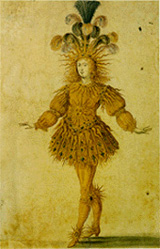
King Louis XIV is probably one of the most well-known European kings, especially to those who have studied practically anything in European history. He is often referred to as "The Sun King". What many do not know is that he was given that name because he played Apollo, the Greek god of the sun, in the ballet Ballet de Huit (Ballet of Night). He admired dance since the age of 13, actively practicing the art, and even made his entire court learn to dance. The art of dance was taken quit seriously by the king and he held ballets as often as he could.

In 1661 he established the ballet academy, Acadamie Royal de Dance, located at the Louvre. Eight years later the academy became the Acadmie Royal de Musique, today known as the Paris Opera. Despite the change in name ballet was just as popular there. Pierre Beauchamp  was Louis' appointed "dance master" and composed/choreographed all of the court ballets. This man is responsible for starting the five basic ballet positions of the feet in turn-out (rotation of the legs), which is practiced by every dancer today. 

Sadly, at the age of 31 Louis had to retire from dancing because he was getting a little too heavy for such activities. At this time the rise of professional dancers emerged, such as the first female dancing star, Mlle La Fontaine. 

At this time in the 17th century, ballet would not have progressed like it did if it wasn't for those who were royalty. Luckily they had high interest in the arts and were able to keep it alive. Much of the innovations in dance after Louis would not have happened if it weren't for him.

I can't help but had a soft spot for this king. At such a young age he had to rule an entire country, during a time of religious tension for that matter. Could you image the responsibility? Yet he still upheld ballet to be supreme. So, thank you Sun King for keeping one of my deepest passions alive despite everything in your chaotic life, even when you became fat. 

Monday, March 22, 2010

Following the Beat

Vaslav Nijinsky

The Joffrey's Ballet recreation of The Rite of Spring

"The dancer's body is simply the luminous manifestation of the soul."

-Isadora Duncan

Composers, such as the great Igor Stravinsky, created some of the most influential scores, which are studied at major universities in the music program, for dance. Igor Stravinsky composed “The Rite of Spring”, which was an enormous achievement for the growth of dance. What so many do not know is that the score was written primarily for a ballet choreographed by Vaslav Nijinsky in Paris. Both of the artists created a new genre in dance and music called Modern, which is the most popular style in dance today. At the time of its development however, it wasn’t welcomed so easily.

Friends of mine, studying at my university in the music department, knew of the infamous “The Rite of Spring” score but had no idea about the ballet that it was created for. The appreciation of the original choreography as fallen through the cracks while its partner, the music, gets praised and remembered still today. My long-term boyfriend is a Recording Industry major who knew of this score, yet not the ballet. It saddened me that it was hard for him to believe that that was the music’s intended purpose, to partner with a dance.

Most dances, not all, can be accompanied by music, right? Most music, not all, makes you want to move to the beat, right? This tie between the two arts is a relationship that defines each other. Both are genetically built into our system, though some may express them much more forward than others and with a deeper understanding through study. Regardless, we all sway to the beat and sing along with the words.

The dancer uses the body to express emotion through sight for the viewer. A dancer’s body is their instrument, no strings attached. A musician has an instrument to create their art through sound. When combined these two make a splendid production that appeals to two of our most powerful senses. Yet, why is dance, as an art, often made fun of or considered boring?

Music is universal, as is dance, however, music is more popular. I hear the mass majority of my friends talk about music than dance: they listen to it in their cars, in their rooms, at a concert, while working out, while lying on the beach, and during thousands of other leisure activities.

If dance and music are so closely related, then why isn’t everyone constantly dancing or viewing it? I don’t mean dancing in the terms of swaying the hips and tapping the foot. I mean by the emotional connection that so many have with music, even if they aren’t musicians. There is still that deep understanding of music in people even if they haven’t studied it. Dance, however, doesn’t get that same attention.

You don’t have to be a trained dancer to witness those complex feelings that dance portrays. Again I come to the realization that not everyone has the same interests. Nor should they be forced to feel a connection that doesn't exist with a certain art form, but that’s not the point.

The question is, why do so many feel a complex relationship with music and not dance when they are the exact same when applied to our senses. Through dance you can actually see the music. I think that’s what Vaslav and Igor’s intent was.

Tuesday, March 16, 2010

Bloodshed Over Ballet

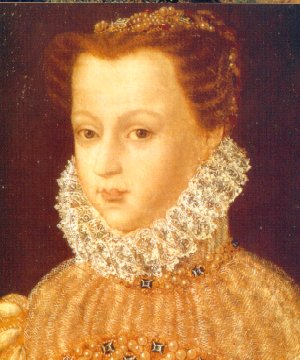
Catherine de Medici

St. Bartholomew's Day Massacre

Where did ballet start exactly?

Well, it started in Italy, but I'm going to jump forward from that time period of development into a time of controversy and growth, both in art and religion. We are in the 16th century in France where the power of dance has developed in popularity. Catherine de Medici brought over ballet to France from Italy when she became a part of the royal family at a very young age, when she already had a great perspective of ballet. Married at the age of 14 to Henry II, Catherine took France under her reign as queen along with her Italian traditions of dance.

After Henry's death (due to a jousting accident) Catherine became the primary ruler. The couple had 10 children together before Henry’s death, three of which were boys. Being a devout Catholic, Catherine made sure her children and new country follow the same teachings. I wouldn’t want to get into an argument with Catherine, she knew what she wanted and wouldn’t have it any other way. She’d even kill you over it.

While she held the throne the Huguenots, followers of Martin Luther, began to rise in France. Catherine was not the type of woman to tolerate this well. One of Catherine's daughters was to marry Henry of Bourbon, who was a protestant (Huguenot). Sounds like a set up maybe. I hardly believe Catherine would let one of her daughters marry someone she despised because of their religion.

With a plot in mind, Catherine decided to put on a grand ballet in "celebration" of her daughter’s marriage. She invited all the Huguenots from the Henry of Bourbon’s region to come to Paris as guests. It was 1572 and the ballet Defense du Paradis premiered at the party. Catherine's sons were even performers in this production, where they defended heaven from the opposing Huguenots. The Catholics, of course, were choreographed to win. Sounds like the guests would not have enjoyed this performance as much as they thought they would.

After a rather outrageous performance that slandered their beliefs, the Huguenots made their way to their courters for a nights rest in Paris. While in their sleep the Catholic court, ordered by Catherine de Medici, dragged them from their beds into the town's streets and murdered them. This was called St. Bartholomew's Day Massacre. It was an infamous part of the French wars of religion. I remember taking European History in high school and learning about this massacre, however, I never heard the word “ballet” once to be associated with this bloody day.

Henry of Bourbon’s life was spared after swearing to Catherine he would convert to Catholicism. Little did the Catholics know is that one-day he would have his revenge on the Catholics. Once all of Catherine’s sons die before becoming king, Henri of “Bourbon” becomes king because of his marriage. I think he might still be a bit bitter to the Catholics. A now recently converted back to Protestantism king makes the country’s decisions on religion.

Though this story isn't a positive perspective of dance in history, it still shows how important it was in shaping religious matters that developed in the Religious Wars. If you have ever taken a European history class I'm sure you have heard about this massacre, but did you know that ballet foreshadowed their fatal future? The queen of France could have come up with another form of entertainment to draw her enemies in, yet she used her beloved interest of dance to state her beliefs rather firmly.

Sunday, February 28, 2010

Let Us Break It Down

Dance for many people, especially here in the United States, is thought to be a feminine activity that only holds entertainment value. I have been dancing since I was a young girl and I am continuing my studies of it still in college. Some of the courses being the hardest I’ve ever taken. There are several different approaches to the art of dance: artistic, philosophical, historical, political, religious, spiritual, therapeutic, educational, critical, and just joyful. What many do not know about dance is that their own roots can be traced back to having a history of dance in their foundation.

I stumbled upon an article, "The Importance of Dance" by Jaye Lynne, and it seems to be a good explanation by someone who is merely a fan of dance, rather than someone who studies it. I think it can relate to others who have never really thought too much about the art.

I began my own study of the dance background in the areas of Europe, tracing back to the Renaissance all the way up to the present Post-modern era here in America. Too many, like yourself maybe, this may sound rather boring and cause you to lose interest because it is like being in a history class. That’s why I think this article is a good introductory to have more of an interest in the things my blog touches on. It describes an everyday person’s outlook on the joy of dance and how it is the body’s language. They describe how every person is born with it, whether they are graceful at it or not.

I hope this might deepen your interest in wanting to learn more about an art form that I find to be so similar to music. However, unlike music, dance is not longer at a high status like it once was. When it made its way over to America the idea of men dancing appeared to seem unacceptable and dance itself to be not so demanding in technicality and athleticism. It actually makes me sad because some people who are the closest to me fall in this category, and though they act supportive in my studies and why I believe it is such an important aspect of all humans, I can see that they don’t fully understand it. Everyone has their own interests. I don’t want everyone to become dancers just because dance is important. I do want people to appreciate it though and understand why it is such a vital part of their history.

This article slowly introduces you to this outlook.

http://www.helium.com/items/344765-the-importance-of-dance

Sunday, February 21, 2010

He's a Renaissance Man

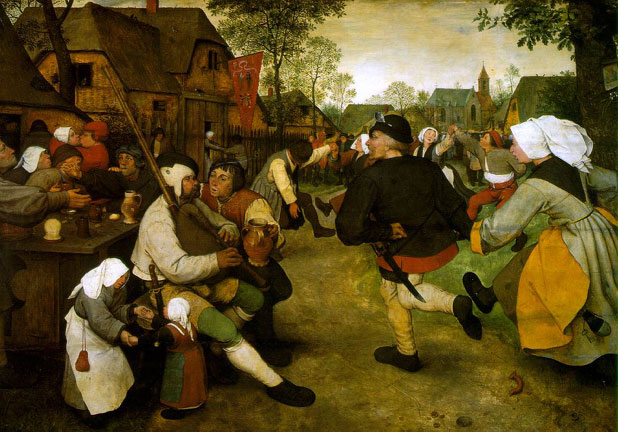
Renaissance Peasant Dance

Let's go back to the 14th century, the century that is known for the Renaissance. The knights in shining armor, the jousting competitions, the big turkey legs, and henna tattoos. Well, at least that's what most people think of when the attend the recreated Renaissance festivals that occur everywhere, especially here in Tennessee.

Though I'm not sure about the henna tattoos, I always notice that a vital important contribution to this historical era is missing. You guessed it, dance.

Priests would dance biblical stories, peasants would dance folk dances, professional dancers were called Minstrels and troubadours would capture the audience's attention through their song and dance.

Have you heard of the television show Glee? It has become a huge hit and I know it takes people back to the time they may have been in the Glee Club at school. Singing and dancing with close friends and competing against rivalry schools. Well, this popular show's story line can be narrowed down back to the Renaissance. Groups of civilians would perform acrobatics, songs and dances. They were known as glee-men and glee-maidens. Now the names have combined to form the glee club. Go tell a friend the background of glee while tuning into Fox once a week to watch Rachel Berry hit a high note and show her moves, they'll be impressed with your knowledge!

Dance was such an important part of this time that to earn the title of "Renaissance Man" (Cortigiano) or "Renaissance Woman" (Virago) one must master the art of dance. For men, they must be involved in knightly sports, know how to ride a horse, have a mastery of all languages, a deep appreciation for all the fine arts, a master of music, a deep sense of grace, and above all, must be an excellent dancer. Then they may be considered for the title.

Dancing Masters were so important in this process that when a woman married her first dance would be with her Dancing Master. It was just that important. Sorry, daddy.

Somehow over time we have lost that constant involvement of dance in our lives. It has become labeled as something "feminine" when in reality it was such a masculine way of life. Respect was earned through the study and though recording it's importance is more difficult than that of paintings and sculptures, I believe the knowledge of it's existence proves its value.

Tuesday, February 16, 2010

Well that doesn't sound very difficult...

Since I was at the tender age of three I could be found in a dance class, aimlessly twirling about. Those random twirls developed a necessity in my life. Music, for more than I can count, is an outlet, a means to escape, as well as writers taking a pen to paper. It is that common ground of creativity and enjoyment within the majority of the population. The previous are actually two of my own outlets, however, they don't compare to the rush of being swallowed up in dance.

Entering college I knew I wanted dance to be one of my minors so I could explore it's foundations and why it connects all countries to one another. Not just the movement intrigued me, but the story did too.
When encountering an old friend I haven't talked to in a long time or someone I randomly just met, I often hold this conversation:

"What are you studying at school?"


"Oh, journalism," I reply to the frequently asked question.


"That sounds great! Any minors?"


When I tell them that one of my two minors is dance I more than often get a confused nod with, "Oh, that sounds fun." It sounds simple to them, not capable of being "studied." I get that look all too often.

Hopefully this blog will shed some light on the topic.

Dance has affected history through the economy of nations, religions across the world, eras of art, governing royalty, wars of all sizes and other aspects that fill the history books. It is more than following an eight count while turning across the floor. I hope through this blog to show readers the complexity and importance that dance once held throughout the world. If you trace back your steps far enough we all were once dancing. In this case, I wish history would repeat itself.