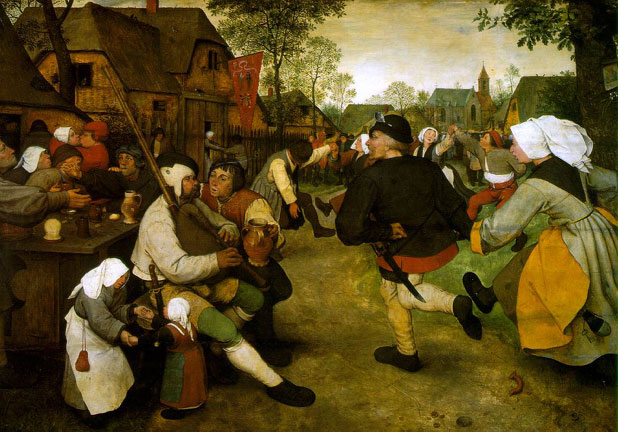
Renaissance Peasant Dance
Though I'm not sure about the henna tattoos, I always notice that a vital important contribution to this historical era is missing. You guessed it, dance.
Priests would dance biblical stories, peasants would dance folk dances, professional dancers were called Minstrels and troubadours would capture the audience's attention through their song and dance.
Have you heard of the television show Glee? It has become a huge hit and I know it takes people back to the time they may have been in the Glee Club at school. Singing and dancing with close friends and competing against rivalry schools. Well, this popular show's story line can be narrowed down back to the Renaissance. Groups of civilians would perform acrobatics, songs and dances. They were known as glee-men and glee-maidens. Now the names have combined to form the glee club. Go tell a friend the background of glee while tuning into Fox once a week to watch Rachel Berry hit a high note and show her moves, they'll be impressed with your knowledge!
Dance was such an important part of this time that to earn the title of "Renaissance Man" (Cortigiano) or "Renaissance Woman" (Virago) one must master the art of dance. For men, they must be involved in knightly sports, know how to ride a horse, have a mastery of all languages, a deep appreciation for all the fine arts, a master of music, a deep sense of grace, and above all, must be an excellent dancer. Then they may be considered for the title.
Dancing Masters were so important in this process that when a woman married her first dance would be with her Dancing Master. It was just that important. Sorry, daddy.
Somehow over time we have lost that constant involvement of dance in our lives. It has become labeled as something "feminine" when in reality it was such a masculine way of life. Respect was earned through the study and though recording it's importance is more difficult than that of paintings and sculptures, I believe the knowledge of it's existence proves its value.


No comments:
Post a Comment