Sunday, February 28, 2010

Let Us Break It Down

Dance for many people, especially here in the United States, is thought to be a feminine activity that only holds entertainment value. I have been dancing since I was a young girl and I am continuing my studies of it still in college. Some of the courses being the hardest I’ve ever taken. There are several different approaches to the art of dance: artistic, philosophical, historical, political, religious, spiritual, therapeutic, educational, critical, and just joyful. What many do not know about dance is that their own roots can be traced back to having a history of dance in their foundation.

I stumbled upon an article, "The Importance of Dance" by Jaye Lynne, and it seems to be a good explanation by someone who is merely a fan of dance, rather than someone who studies it. I think it can relate to others who have never really thought too much about the art.

I began my own study of the dance background in the areas of Europe, tracing back to the Renaissance all the way up to the present Post-modern era here in America. Too many, like yourself maybe, this may sound rather boring and cause you to lose interest because it is like being in a history class. That’s why I think this article is a good introductory to have more of an interest in the things my blog touches on. It describes an everyday person’s outlook on the joy of dance and how it is the body’s language. They describe how every person is born with it, whether they are graceful at it or not.

I hope this might deepen your interest in wanting to learn more about an art form that I find to be so similar to music. However, unlike music, dance is not longer at a high status like it once was. When it made its way over to America the idea of men dancing appeared to seem unacceptable and dance itself to be not so demanding in technicality and athleticism. It actually makes me sad because some people who are the closest to me fall in this category, and though they act supportive in my studies and why I believe it is such an important aspect of all humans, I can see that they don’t fully understand it. Everyone has their own interests. I don’t want everyone to become dancers just because dance is important. I do want people to appreciate it though and understand why it is such a vital part of their history.

This article slowly introduces you to this outlook.

http://www.helium.com/items/344765-the-importance-of-dance

Sunday, February 21, 2010

He's a Renaissance Man

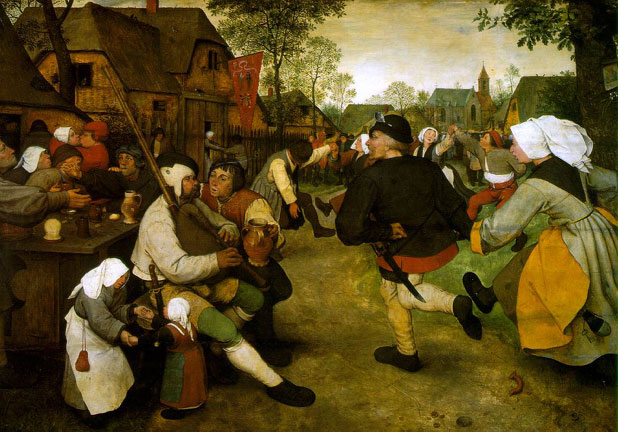
Renaissance Peasant Dance

Let's go back to the 14th century, the century that is known for the Renaissance. The knights in shining armor, the jousting competitions, the big turkey legs, and henna tattoos. Well, at least that's what most people think of when the attend the recreated Renaissance festivals that occur everywhere, especially here in Tennessee.

Though I'm not sure about the henna tattoos, I always notice that a vital important contribution to this historical era is missing. You guessed it, dance.

Priests would dance biblical stories, peasants would dance folk dances, professional dancers were called Minstrels and troubadours would capture the audience's attention through their song and dance.

Have you heard of the television show Glee? It has become a huge hit and I know it takes people back to the time they may have been in the Glee Club at school. Singing and dancing with close friends and competing against rivalry schools. Well, this popular show's story line can be narrowed down back to the Renaissance. Groups of civilians would perform acrobatics, songs and dances. They were known as glee-men and glee-maidens. Now the names have combined to form the glee club. Go tell a friend the background of glee while tuning into Fox once a week to watch Rachel Berry hit a high note and show her moves, they'll be impressed with your knowledge!

Dance was such an important part of this time that to earn the title of "Renaissance Man" (Cortigiano) or "Renaissance Woman" (Virago) one must master the art of dance. For men, they must be involved in knightly sports, know how to ride a horse, have a mastery of all languages, a deep appreciation for all the fine arts, a master of music, a deep sense of grace, and above all, must be an excellent dancer. Then they may be considered for the title.

Dancing Masters were so important in this process that when a woman married her first dance would be with her Dancing Master. It was just that important. Sorry, daddy.

Somehow over time we have lost that constant involvement of dance in our lives. It has become labeled as something "feminine" when in reality it was such a masculine way of life. Respect was earned through the study and though recording it's importance is more difficult than that of paintings and sculptures, I believe the knowledge of it's existence proves its value.

Tuesday, February 16, 2010

Well that doesn't sound very difficult...

Since I was at the tender age of three I could be found in a dance class, aimlessly twirling about. Those random twirls developed a necessity in my life. Music, for more than I can count, is an outlet, a means to escape, as well as writers taking a pen to paper. It is that common ground of creativity and enjoyment within the majority of the population. The previous are actually two of my own outlets, however, they don't compare to the rush of being swallowed up in dance.

Entering college I knew I wanted dance to be one of my minors so I could explore it's foundations and why it connects all countries to one another. Not just the movement intrigued me, but the story did too.
When encountering an old friend I haven't talked to in a long time or someone I randomly just met, I often hold this conversation:

"What are you studying at school?"


"Oh, journalism," I reply to the frequently asked question.


"That sounds great! Any minors?"


When I tell them that one of my two minors is dance I more than often get a confused nod with, "Oh, that sounds fun." It sounds simple to them, not capable of being "studied." I get that look all too often.

Hopefully this blog will shed some light on the topic.

Dance has affected history through the economy of nations, religions across the world, eras of art, governing royalty, wars of all sizes and other aspects that fill the history books. It is more than following an eight count while turning across the floor. I hope through this blog to show readers the complexity and importance that dance once held throughout the world. If you trace back your steps far enough we all were once dancing. In this case, I wish history would repeat itself.